Jewel Loop - Coloring Sort
TaTa Game Technology LimitedCasual
4.868.00 Reviews
- Version
- 1.19.1
- Installs
- 100.00K
- Age Rating
- Everyone
Screenshots


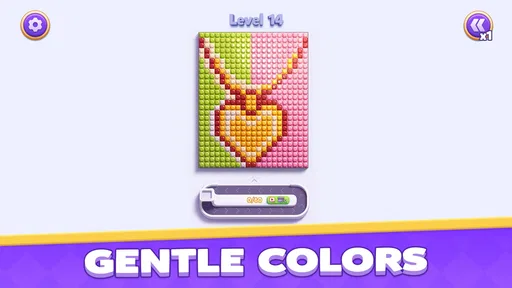
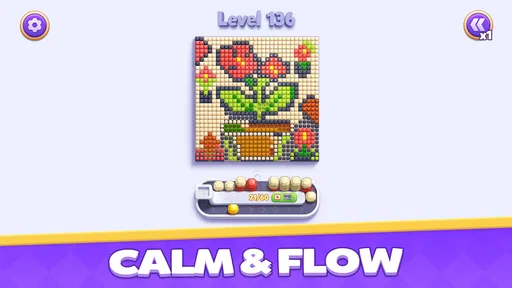
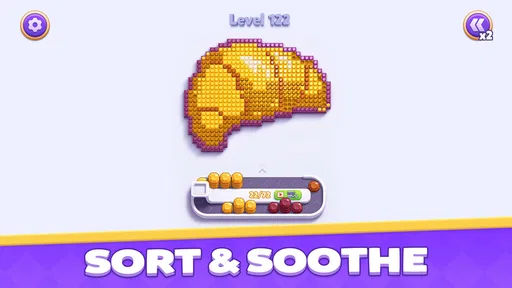
Our Review of Jewel Loop - Coloring Sort
 Analysis by Appyee
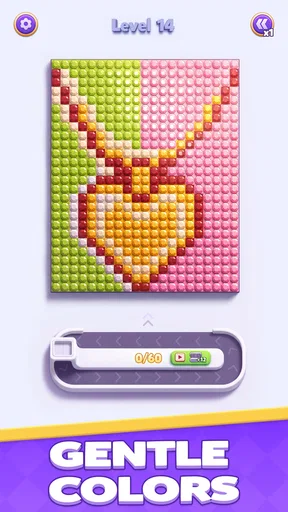
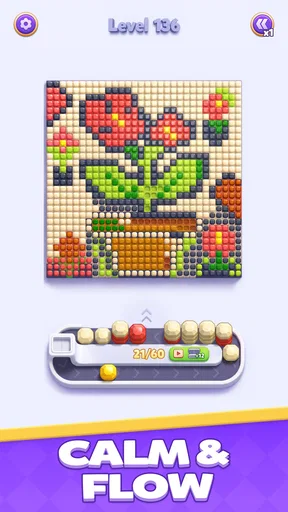
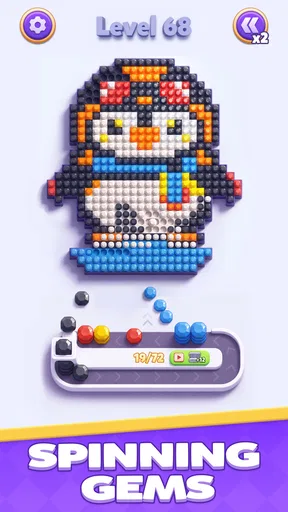
I found Jewel Loop - Coloring Sort most interesting when I stopped treating it as a quick matching game and paid attention to how its visual sorting connects with the pixel-art result. It is a casual game from TaTa Game Technology Limited, built around arranging jewels, turning a loop, and gradually producing colorful pictures. That combination gives it a calmer identity than a typical score-chasing puzzle, although it still asks for careful visual attention and repeated small actions.
My first impression was that the game is easy to understand at a basic level. The central idea is visible almost immediately: sort the jewels, use the loop, and watch the image take shape. I did not need a long explanation before trying the first interaction. That matters for people who want a game they can open during a short break rather than study before playing.
The game is free to start and is marked for Everyone, which makes it approachable for families and casual players. It has a 4.8 average from around 9.3 thousand ratings, and its listing shows over 100 thousand installs. Those figures suggest that the simple presentation has connected with a broad audience, but they do not change the practical question I think matters more: whether the visual sorting and repeated gestures suit the way you prefer to play.
How Jewel Loop handles readability and navigation
I find the game’s visual layout easiest to approach when I treat each screen as a small sorting problem rather than trying to take in the whole board at once. In this section, I focus on how the presentation supports that step-by-step reading, and where a deliberate scan can help before moving on to the practical limits of playing on a phone.
A clear visual goal without a crowded presentation
The strongest part of the design is the relationship between action and reward. You are not simply moving colored pieces with no context; each successful sorting decision contributes to a larger pixel-art image. I found that visual destination helpful because it gives a reason to continue through a level. Even if the individual jewel movement feels repetitive, the developing picture provides a sense of progress that a plain color-matching board may lack.
The interface is best suited to players who can comfortably distinguish colors, shapes, and positions on a small screen. The game’s basic concept is visual, so readability depends less on reading instructions and more on recognizing what belongs together. That makes it friendly for people who prefer learning through observation rather than text-heavy tutorials.
I also like that the game’s premise does not require knowledge of complicated menus, character abilities, or a large collection of rules. Someone can hand the phone to a family member and explain the goal in ordinary language. For younger players, that simplicity lowers the learning curve. For older players who want a quiet puzzle, it avoids the clutter found in many free games that surround the board with several competing systems.
Where the navigation may still require patience
Simple does not always mean effortless. Sorting tasks can become visually dense when several jewels or destinations compete for attention. I found myself needing to pause and inspect the board rather than act immediately, especially when I was trying to avoid undoing a useful arrangement. That is not a flaw for players who enjoy deliberate puzzles, but it can feel slow if you expect instant, highly obvious matches.
The pixel-art objective also creates a small readability trade-off. It makes progress satisfying, but it can draw attention away from the next practical move. I sometimes focused on the emerging picture instead of checking the loop carefully. A useful habit is to separate the two stages mentally: first identify the move that reduces confusion, then look at the artwork as a reward. That approach makes the board easier to read and prevents the decorative result from distracting from the sorting task.
Because the game is based on visual organization, I would not choose it for someone who needs a strongly text-led interface or who finds color-based distinctions unreliable. A word puzzle with explicit labels, or a turn-based game with larger written commands, may provide more dependable information in that situation.
Small-screen use and practical reading habits
I found the experience more comfortable when I held the phone steadily and played without rushing. On a small display, the difference between casually glancing at the board and actively inspecting it is noticeable. If you are playing on public transport or while walking between tasks, the game can become harder to follow because your attention is divided.
For better readability, I recommend using a clean screen, increasing the device’s general display size if needed, and avoiding play in glare. These are not special game settings; they are simple environmental adjustments that help with any jewel-sorting activity. They are particularly useful here because a missed visual distinction can lead to several corrective moves rather than one obvious mistake.
Motor and sensory considerations
The controls are based on repeated touch interaction rather than complicated combinations. That is a positive for players who prefer one-finger play and do not want to coordinate several buttons. The actions feel conceptually direct: identify a jewel, interact with the loop, and continue organizing the board. I found that low control complexity made the game approachable even when the puzzle itself demanded concentration.
At the same time, repeated tapping or dragging can still be tiring for people with limited hand strength, tremor, joint pain, or difficulty maintaining precise contact. A simple control scheme does not automatically remove motor barriers. If your hand becomes uncomfortable after several minutes, shorter sessions are more realistic than trying to complete a long run in one sitting. Resting the device on a stable surface may also reduce the effort needed to keep it steady.
The game’s visual style may appeal to players who enjoy bright, decorative feedback, but that same quality can be demanding for people sensitive to busy colors or continuous visual stimulation. I would approach it cautiously if flashing effects, saturated boards, or rapidly changing images usually cause discomfort. The safest way to judge this is to try a brief session in a comfortable setting and notice whether the artwork helps you focus or competes with the puzzle.
Audio is not the main reason to play this game. The core experience is understandable through the board and the developing image, so I would consider it a reasonable candidate for someone who prefers to keep sound low or off. I would not promise that every part of the experience is equally usable without audio, but the central sorting idea does not depend on spoken instructions or dialogue.
Useful strategies for different abilities
One practical strategy is to sort by reducing visual clutter rather than chasing the most attractive move. When several choices look possible, I first look for the jewel that blocks the greatest number of other paths. Clearing that obstruction can make later decisions easier and reduces the need for rapid corrections. This is especially helpful for players who need more time to inspect each action.
Another useful approach is to use a consistent visual scan. I prefer checking the loop from one side to the other instead of jumping randomly between colors. A fixed scan reduces the amount of eye movement and makes it easier to remember which positions I have already considered. It also turns a potentially overwhelming board into a series of smaller checks.
For players who tire quickly, I would treat the emerging pixel art as a natural stopping point. Rather than measuring a session by how many puzzles are completed, stop after a meaningful piece of progress and return later. This keeps the game relaxing and avoids turning a casual activity into a test of endurance.
Situational access in everyday life
This is the kind of game I can imagine using during a quiet coffee break, while waiting for an appointment, or at home when I want something more engaging than scrolling but less demanding than a competitive game. The visual goal makes a short session feel purposeful. I can play for a little while, put the phone down, and return without needing to remember a complicated story or a large set of controls.
It is less suitable when I am distracted. If I am listening closely to a conversation, carrying bags, or moving through a busy place, the sorting requires more attention than a truly passive time-filler. The game rewards a stable posture and a clear view of the screen. That makes it a better companion for a seated break than for multitasking.
For families, the accessible premise creates an easy opportunity for shared play. A child can understand the visual goal, while an adult can help with planning when the board becomes confusing. However, I would still supervise younger players around optional purchases. The game is free, but individual in-app purchases range from $1.99 to $99.99. That is a significant spread, so device purchase controls and a clear family rule are sensible before handing it over.
The Everyone age rating makes the game broadly appropriate in tone, but age suitability is not the same as ability suitability. A child may understand the objective yet struggle with small visual details or repeated touch actions. An older adult may enjoy the calm pixel-art progress but need a larger screen and more time per move. In both cases, the best experience comes from adapting the playing environment rather than assuming that a simple game works identically for everyone.
How it compares with familiar casual alternatives
Compared with a conventional match-three game, Jewel Loop feels less focused on speed and chain reactions. A match-three title usually emphasizes quick recognition, cascading effects, and score pressure. Here, the appeal is more connected to organizing pieces and seeing an image develop. If you like making rapid combinations and chasing increasingly dramatic effects, a traditional match-three game may feel more energetic.
Compared with a pure coloring app, this game adds a puzzle layer. You do not simply choose a color and fill an open area; you have to make sorting decisions before the pixel-art result appears. That extra step gives the activity more structure, but it also means the game is not ideal if you want completely freeform coloring with no problem-solving.
Compared with a standard jigsaw puzzle, the jewel-and-loop format is more compact and visually stylized. It can be easier to pick up for a short session, while a physical or digital jigsaw may offer a slower, more spacious experience. I would choose Jewel Loop when I want the satisfaction of arranging pieces without committing to a large image. I would choose a jigsaw alternative when I want fewer repeated touch actions and more control over the overall picture.
What may frustrate regular players
The main limitation is repetition. The same basic sorting relationship is also the game’s identity, so players who need constant mechanical variety may lose interest. The pixel-art reward helps, but it does not completely change the underlying action. I enjoyed the calm rhythm, yet I can see it becoming less compelling for someone who prefers new rules, timed challenges, or a strong progression system.
There is also a difference between being easy to learn and being easy to complete. The opening idea is straightforward, but careful arrangements can still require patience. Players who dislike making a move, reconsidering it, and slowly clearing a visual tangle may find the experience more frustrating than relaxing.
The free entry point is convenient, but the presence of in-app purchases means I would not describe the game as entirely frictionless for every household. Anyone sensitive to spending prompts should check the purchase settings on the device before playing. I also think players should decide in advance whether they are using the game as a free casual pastime or are comfortable paying for optional items, because that boundary is easier to maintain when it is set beforehand.
The current version is 1.19.1, and the game requires Android 6.0 or later. That makes checking the phone’s operating system worthwhile before installing, particularly on an older device. I would also leave enough free storage and close demanding apps if the phone is already struggling, not because this game is inherently difficult to run, but because smooth touch response matters when sorting depends on precise interaction.
Who should play and who should skip it
I would recommend it to people who enjoy visual organization, pixel-art rewards, and calm casual puzzles. It is a good fit for someone who wants a clear activity during short breaks, likes seeing gradual progress, and does not need a story or competitive leaderboard to stay interested. It may also suit families looking for a simple game that can be explained without a long tutorial.
I would be more cautious about recommending it to players with significant color-vision difficulties, strong sensitivity to busy visual effects, or hand conditions that make repeated touch actions painful. I would also steer away from it if your ideal casual game is fast, unpredictable, and constantly changing. In those cases, a text-based puzzle, a slower board game, or a more varied arcade title may be a better match.
My favorite way to use it is as a focused reset between demanding tasks. I play while seated, keep the screen free from glare, scan the board methodically, and stop when I have made a satisfying piece of progress. That routine makes the game feel intentional rather than like another source of endless scrolling. It also exposes its real strength: the game gives a small visual task a tangible creative payoff.
An inclusive verdict for a visual sorting game
Jewel Loop - Coloring Sort is a welcoming casual game in concept, with a low learning barrier and a distinctive connection between sorting and pixel art. I appreciate that its main idea can be understood without complicated language, and that the action does not depend on rapid button combinations. Those qualities make it easier to approach across ages and gaming experience levels.
Its inclusiveness has limits, however. The board remains visually dependent, and repeated touch interaction may not suit every player. The game also works best when you can give it steady attention, so it is not equally comfortable in every environment. I would describe it as accessible in its simplicity, rather than universally accessible in every practical sense.
Developed by TaTa Game Technology Limited, it is free to try and carries an Everyone rating, with optional purchases that should be managed thoughtfully. After spending time with it, I see the best value in its quiet, structured rhythm: sort carefully, reduce clutter, and let the picture become the reward. If that sounds more appealing than speed, competition, or freeform coloring, this is an easy casual game to try. If you need extensive control options, non-visual guidance, or constant mechanical variety, I would choose a different type of puzzle instead.
Verdict
Strengths of Jewel Loop - Coloring Sort
- Relaxing color-sorting gameplay suitable for short breaks
- Simple controls make it accessible for most age groups
- Gradually increasing difficulty keeps the puzzles engaging
- Bright jewel visuals are pleasant and easy to follow
- Offline play is convenient when traveling or without Wi-Fi
Limitations of Jewel Loop - Coloring Sort
- Repetitive mechanics may become predictable after extended play
- Later levels can feel more challenging than the early stages
- Limited gameplay variety may not satisfy strategy-focused players
- Frequent ads may interrupt the experience between levels
- Some players may find the progression too slow without bonuses
Other Releases by TaTa Game Technology Limited
View All
Jewel Coloring
Casual4.8

3D Bubble Shoot - ASMR Game
Casual4.9
Similar Picks in This Category
View All
My Talking Angela
Outfit7 Limited4.2

My Talking Tom
Outfit7 Limited4.3

Pou
Zakeh4.2

My Talking Tom 2: Pet Game
Outfit7 Limited4.3

Candy Crush Saga
King4.6

Bridge Race
Supersonic Studios LTD4.1
Frequently Asked Questions
What is Jewel Loop - Coloring Sort, and how does the gameplay work?
Jewel Loop - Coloring Sort is a casual puzzle game focused on arranging colorful jewel pieces into the correct order. The main challenge is to sort or organize the pieces according to their colors and patterns, usually within a limited number of moves or spaces. Its simple mechanics make it easy to learn, while progressively harder levels add more complicated layouts and require careful planning.
Is Jewel Loop - Coloring Sort free to download and play?
The game can generally be downloaded for free on supported Android or iOS devices, allowing players to try its core levels without an upfront purchase. However, free games of this type may include optional advertisements, bonus offers, or in-app purchases for extra hints, lives, coins, or other conveniences. Check the store listing before downloading for the latest pricing and purchase details.
Does Jewel Loop - Coloring Sort require an internet connection?
Many of the basic sorting puzzles can usually be played without a constant internet connection, which makes the game convenient for travel or short offline sessions. Nevertheless, an internet connection may be needed for advertisements, cloud-related features, updates, rewards, or purchases. Availability of offline play can vary after updates, so testing the game once online is recommended before relying on it offline.
Is Jewel Loop - Coloring Sort suitable for children and casual players?
The game is designed around straightforward color-matching and sorting mechanics, so it can be approachable for casual players and older children who enjoy quiet puzzle challenges. Difficulty may increase as levels progress, requiring concentration and logical thinking rather than fast reflexes. Parents should still review the age rating, advertising content, and in-app purchase settings before allowing younger children to play.
What should I check before installing Jewel Loop - Coloring Sort?
Before installing, confirm that your device meets the current Android or iOS requirements and has enough free storage for the application and future updates. It is also worth checking recent user reviews, the privacy information, advertising behavior, and whether optional purchases are included. If you dislike interruptions, verify whether the game offers an ad-free option or depends heavily on rewarded advertisements.
Play our best games!


